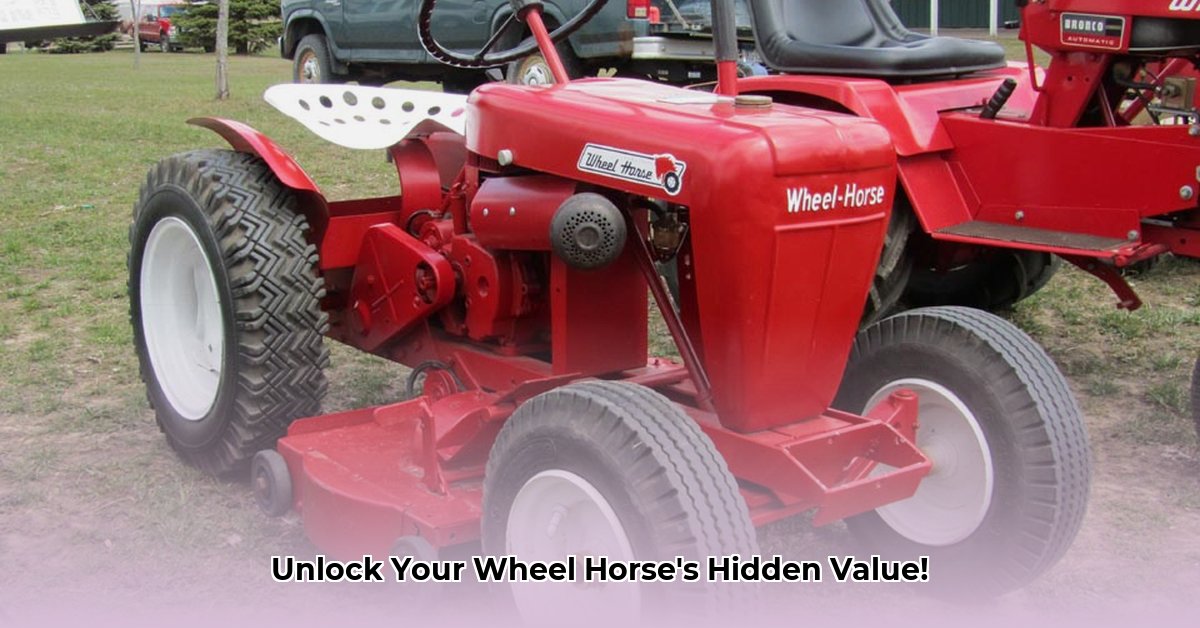
Identifying Your 1960 Wheel Horse 400: Authenticity Check
Before diving into valuation, confirming the authenticity of your 1960 Wheel Horse 400 is crucial. The serial number, typically stamped on the tractor's frame, acts as a unique identifier. Online resources and owner's manuals can help you decipher this code, confirming both the year and model. Beyond the serial number, pay close attention to the tractor's cosmetic features. The shape of the hood, the style of the fenders, and any unique decals can all contribute to confirmation. Comparing your tractor to photographs of known genuine 1960 models from reputable online sources is highly recommended. For additional valuation resources, check out the tractor value guide.
Assessing Condition: A Step-by-Step Inspection
A thorough condition assessment is paramount for accurate valuation. We'll break this down systematically, creating a repeatable process for consistent results:
Engine: How well does the engine run? Listen for unusual noises and check for leaks (oil, coolant, fuel). Perform a compression test for a quantifiable measure of engine health. A visual inspection should be meticulous, noting rust, corrosion, or any other signs of wear and tear.
Transmission: Does the transmission shift smoothly through all three gears? Identify any signs of slipping, grinding, or binding. This indicates potential repair costs impacting overall value.
Body: This involves a careful visual assessment of the tractor's body. Look for rust, dents, significant cosmetic damage, and missing parts. Document everything with detailed photographs. The completeness of the original components significantly impacts value.
Attachments: Do you have all the original attachments (mower deck, plow, etc.)? A complete set of original implements drastically boosts value. Photograph these as well, documenting their condition, functionality, and any signs of wear or damage.
Tires: Are the tires original? Assess their condition, looking for wear, cracks, and general degradation. Original tires in decent condition are a valued asset.
Implement a scoring system for each component (Excellent, Good, Fair, Poor) and thoroughly document your findings with photographs.
Determining Market Value: Navigating the Uncharted Waters
Determining the precise value of a 1960 Wheel Horse 400 presents a unique challenge. Unlike cars with established price guides, no single definitive resource exists. Online resources provide some guidance, but they are not foolproof. Therefore, a combination of approaches is recommended.
Factors influencing value:
Originality: Has the tractor been significantly modified or restored? A largely original tractor with minimal modifications will likely command a higher price.
Completeness: Are all parts present and accounted for? A complete tractor with all original accessories is generally more desirable.
Condition: Your meticulous condition assessment, along with photographic documentation, serves as the foundation.
Rarity: Some Wheel Horse 400s may possess rare or unique features that increase their value.
Market Demand: Current collector interest plays a notable role. Online forums such as Yesterday's Tractors (https://www.yesterdaystractors.com/values/WHEELHORSE.html) offer insights, although they might not always be totally current.
Methodology: Research recent sales data for comparable tractors. This requires diligence and careful consideration of the specifics of each sale. Remember each tractor is unique.
Restoration and Maintenance: A Cost-Benefit Analysis
Restoration increases value but comes with substantial costs. Parts sourcing can be challenging, impacting the overall restoration expense. Detailed photographic documentation is key. A well-documented restoration will substantially boost the value, exceeding the costs involved in the restoration process.
Sourcing Parts: The Collector's Quest
Finding parts for a 1960 Wheel Horse 400 requires research and persistence. Online forums dedicated to Wheel Horse tractors, specialized parts suppliers, and vintage equipment auctions are your primary resources. Be prepared for a quest to find the necessary parts.
Finding and Buying/Selling: Smart Strategies
Online marketplaces, collector forums, and auctions are common channels for buying and selling. Thorough pre-purchase inspections are paramount. Honest representation of the tractor's condition is crucial for successful transactions. Always choose a safe, public location for any in-person exchanges.
Conclusion: Your Journey to Ownership and Value
This guide provides a framework for assessing the value of a 1960 Wheel Horse 400. However, remember that precise valuation is subjective and requires thorough research. Engage with experienced collectors and utilize online resources strategically. Ultimately, the value assigned reflects both the tractor’s inherent qualities and the passionate appreciation of its historical significance.